
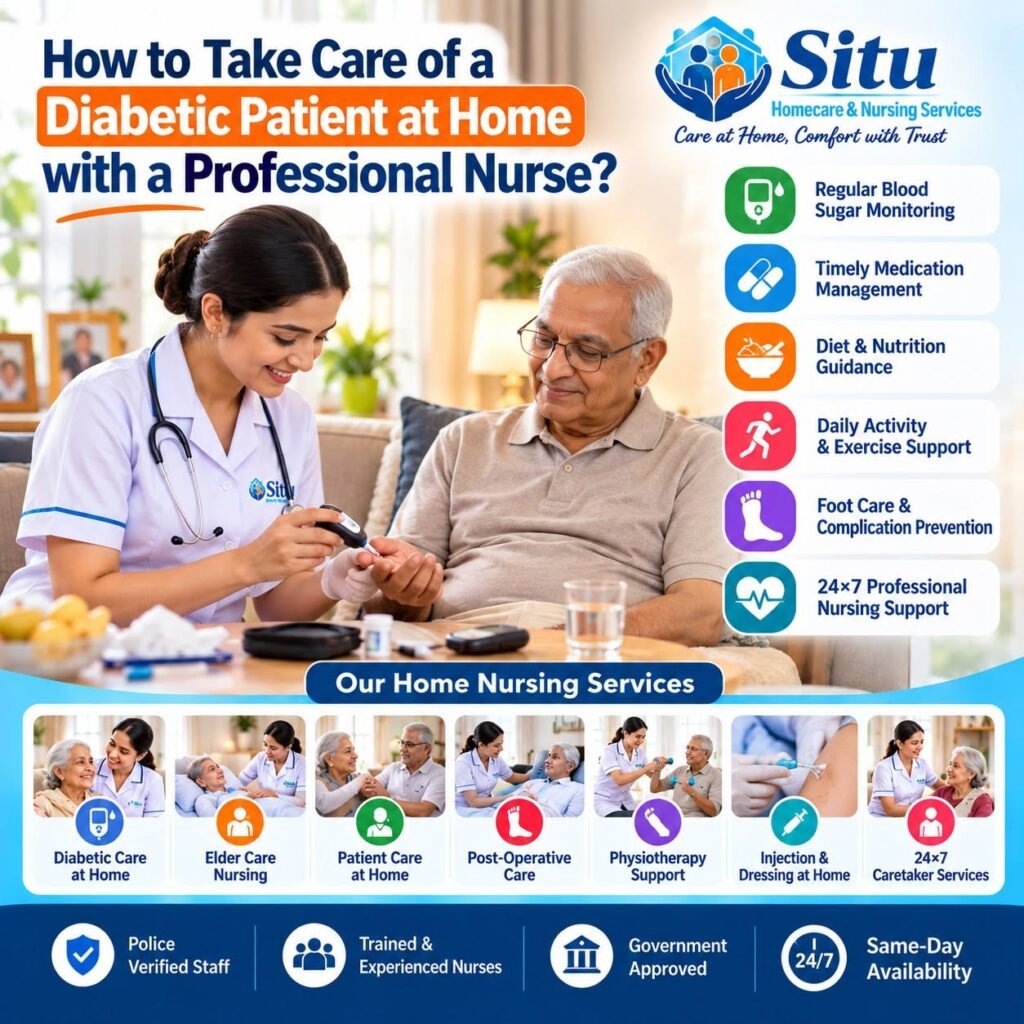
How to Take Care of a Diabetic Patient at Home with a Professional Nurse
Diabetes care at home involves much more than checking sugar levels. A safe routine may include blood glucose monitoring, prescribed medicines or insulin, meals, hydration, physical activity, foot checks, prevention of low blood sugar, and knowing when medical help is needed. A professional nurse can help families follow the patient's doctor-directed care plan more consistently.
Families searching for diabetic patient care at home in Gurgaon are often caring for an older adult or a patient who needs help staying consistent with a diabetes plan. The biggest value of organized home support is not to replace the doctor—it is to help the patient follow the prescribed routine safely and to notice problems early.
NIDDK explains that diabetes management involves more than blood glucose alone. Blood pressure, cholesterol, medicines, healthy lifestyle habits and regular follow-up can all be part of reducing the risk of diabetes-related health problems.
What Does Diabetic Patient Care at Home Include?
Diabetes affects people differently. One person may manage independently with tablets and periodic glucose checks, while another may use insulin, a continuous glucose monitor (CGM), have reduced vision or mobility, or have other conditions such as kidney disease, heart disease or neuropathy. Home care should therefore be individualized.
Daily Monitoring
Helping the patient follow the clinician-recommended blood glucose monitoring schedule and record readings accurately for review.
Routine Support
Supporting prescribed medication timing, meals, hydration, mobility, hygiene and other daily activities that can affect diabetes management.
Complication Awareness
Watching for low blood sugar, persistent high readings, dehydration, foot wounds, infection or other changes that need medical attention.
How Can a Professional Nurse Help a Diabetic Patient at Home?
A professional home nurse can make the care plan easier to follow, especially for elderly patients, people who use insulin, those recovering from illness or surgery, and patients who need help with mobility, vision or memory. The nurse's duties should match their training and the doctor's instructions.
| Care Need | Possible Nursing Support | Safety Boundary |
|---|---|---|
| Blood glucose checks | Assist with meter/CGM routine, record readings and note symptoms | Targets and testing frequency should come from the treating team |
| Medication routine | Support adherence to prescribed tablets or injections | Do not independently change medicines or doses |
| Insulin | Administer or assist when appropriate to training and prescription | Type, dose and timing must follow the prescribed plan |
| Meals & hydration | Help follow the individualized meal plan and observe intake | Diet needs may change with kidney disease, illness or other conditions |
| Foot observation | Help inspect feet when the patient cannot do so safely or effectively | Open wounds, infection or concerning changes need medical review |
| Daily activities | Support safe mobility, hygiene and routine activities | Activity should respect medical and physiotherapy advice |
Blood Sugar Monitoring at Home
Checking and recording blood glucose can be an important part of diabetes management. NIDDK notes that a blood glucose meter provides a reading from a small blood sample, while CGMs estimate glucose levels repeatedly throughout the day and night. The right device and testing schedule depend on the patient's treatment.
What should be recorded?
- Blood glucose reading and time of test.
- Whether the reading was before a meal, after a meal, at bedtime or during symptoms.
- Relevant medicines or insulin taken according to the care plan.
- Unusual food intake, skipped meals or vomiting.
- Exercise or activity that was more or less than usual.
- Symptoms such as shaking, sweating, dizziness, confusion, excessive thirst or frequent urination.
Blood sugar targets are not identical for everyone. Age, pregnancy, other illnesses, risk of hypoglycemia and treatment type can change what the clinician considers appropriate. Use the patient's written target range rather than copying a generic target from the internet.
Medication and Insulin Safety at Home
Diabetes treatment may include oral medicines, non-insulin injections, insulin or combinations of medicines. NIDDK advises people with diabetes to work with their health care team to choose treatments that fit their condition and lifestyle.
- Keep one current medication list with dose and timing.
- Do not double a missed dose unless the prescriber specifically instructs it.
- Confirm insulin type, dose and timing before administration.
- Use the correct injection device and follow storage instructions for insulin or other injectable medicines.
- Rotate injection sites if instructed by the diabetes-care team.
- Do not stop or alter medication because of one unusual reading without following the care plan.
- Ask the prescribing clinician or pharmacist about what to do during illness, poor oral intake or fasting.
A nurse can support medication administration when it falls within their training and the prescribed plan. The nurse should never create a new insulin correction scale or modify a physician's dosage independently.
Low Blood Sugar: What Families Should Know
The CDC considers blood glucose below 70 mg/dL to be low blood sugar (hypoglycemia). Symptoms can include shaking, sweating, fast heartbeat, hunger, dizziness, anxiety, irritability or confusion. More severe hypoglycemia can cause difficulty walking or seeing, seizures or loss of consciousness.
Prepare for hypoglycemia before it happens
- Know the patient's usual symptoms and written treatment plan.
- Keep an appropriate fast-acting glucose source available if the clinician recommends it.
- If glucagon has been prescribed, family or caregivers should know where it is and how the prescribed product is used.
- Review repeated low readings with the treating doctor—frequent lows should not simply be accepted as normal.
- Check glucose when symptoms suggest a low, when feasible and according to the care plan.
Diet, Hydration and Physical Activity
Diabetes does not have a single universal meal plan. The right plan depends on medicines, body weight, kidney function, heart health, food preferences, activity level and other medical conditions. A dietitian or diabetes-care professional can help create an individualized plan.
Regular Meals
Consistent meal timing can be important for people taking insulin or medicines that can cause low blood sugar. Avoid skipping meals unless the treating team has planned for it.
Hydration
Encourage fluids according to the patient's medical plan. People with heart or kidney disease may have specific fluid limits, so do not apply generic hydration advice.
Physical Activity
Activity can support diabetes management, but the type and intensity should fit the person's health, balance, foot condition and treatment plan.
Before exercise or increased activity
Some patients—especially those using insulin or medicines associated with hypoglycemia—may need extra glucose checks or food planning around activity. Ask the diabetes-care team what to do before, during and after exercise, particularly if the patient has had previous low blood sugar episodes.
Diabetic Foot Care at Home
Diabetes can damage nerves and reduce blood flow to the feet, meaning a small blister or cut may be missed and can become more serious. CDC and NIDDK both recommend regular foot observation and early medical attention for concerning changes.
- Check feet daily for cuts, blisters, redness, swelling, sores or skin/nail changes.
- Use a mirror or ask a family member/caregiver for help if the soles are difficult to see.
- Wash feet in warm—not hot—water and dry carefully, especially between the toes.
- Avoid walking barefoot, including inside the home, when injury risk is present.
- Wear properly fitting footwear and check inside shoes for stones or rough areas.
- Do not attempt to cut corns/calluses or treat an ulcer at home without professional advice.
- Report an open wound, infection, color change, swelling or other concerning problem promptly.
If a diabetic foot wound or another wound needs professional dressing, families can also review Situ HomeCare's wound dressing services in Gurgaon.
Sick-Day and High Blood Sugar Safety
Infection, fever, vomiting, diarrhea, dehydration, stress and some medicines can raise glucose levels. People who use insulin—especially those with type 1 diabetes—may have a specific sick-day plan that includes more frequent glucose checks and, in some cases, ketone testing.
CDC notes that high ketones can be an early sign of diabetic ketoacidosis (DKA), a medical emergency. Families should ask the treating clinician for a written sick-day plan covering when to test ketones, when to call the doctor, what to do if the patient cannot eat or drink, and which medicines should or should not be continued.
Contact the medical team promptly when the care plan indicates, especially for:
- Persistent very high or very low glucose readings.
- Moderate or high ketones when the patient's plan includes ketone testing.
- Repeated vomiting or inability to keep fluids down.
- Signs of dehydration or reduced urination.
- New confusion, unusual drowsiness or severe weakness.
- Breathing difficulty or rapid/deep breathing.
- A new foot wound, redness, swelling or infection.
- Any serious or rapidly worsening symptom.
A Practical Daily Diabetes Care Routine at Home
Review the day's prescribed plan
Confirm medicines, insulin if prescribed, meal timings, glucose checks, appointments and any exercise or physiotherapy instructions.
Monitor glucose at the recommended times
Record results accurately and note any symptoms or unusual events that may explain unexpected readings.
Support medicines and meals
Follow the prescribed medication schedule and individualized meal plan. Avoid making unplanned medication adjustments based only on one reading.
Encourage safe activity
Support walking or prescribed exercise when appropriate and observe for dizziness, weakness, foot pain or low blood sugar symptoms.
Inspect the feet and skin
Look for cuts, blisters, pressure areas, redness, swelling or wounds—especially when the patient has neuropathy or limited mobility.
Prepare for the night
Confirm evening medicines, any bedtime glucose check ordered by the clinician, safe access to the bathroom, and that emergency glucose or glucagon supplies are where the care plan requires them.
How to Choose a Professional Nurse for Diabetic Care in Gurgaon
Share the full diabetes treatment plan
Tell the provider whether the patient uses tablets, insulin, a CGM, a glucose meter, has kidney disease, neuropathy, vision problems, foot wounds or a history of severe hypoglycemia.
Match staff training to required tasks
If insulin, injections, wound care or other clinical procedures are required, ask what qualifications and relevant experience the assigned nurse has.
Ask about experience with diabetes-related complications
An elderly person with recurrent hypoglycemia, a patient with a diabetic foot wound and a stable person needing routine support have different care needs.
Verify identity and screening
Ask the provider how the assigned staff member's identity, references and background are checked. If a specific verification claim is made, ask for current documentation.
Define duties, shifts and escalation clearly
Agree on who checks glucose, who administers prescribed medicines, what is recorded, what happens after an abnormal reading and whom the nurse contacts for clinical guidance.
Review the plan regularly
Diabetes needs can change after illness, hospitalization, medication changes, weight change or repeated low/high readings. Keep the care plan aligned with the treating clinician's latest instructions.
Nurse vs Caregiver for a Diabetic Patient
| Need | Caregiver / Attendant | Professional Nurse |
|---|---|---|
| Meals, hygiene, companionship | Often appropriate | May assist, but nursing may not be necessary for these needs alone |
| Routine walking / mobility support | Often appropriate within safe limits | May assist when part of the nursing plan |
| Blood glucose checks | May assist if trained and the care plan permits | Can support monitoring within the nursing plan |
| Insulin or other prescribed injections | Not a routine caregiver duty | Appropriately trained nurse may be required |
| Diabetic wound care | Not a routine caregiver role | May require skilled nursing and medical oversight |
| Clinical assessment/escalation | Can notice and report changes | Can provide nursing observation within professional scope and escalate concerns |
Diabetic Patient Care Support from Situ HomeCare & Nursing Services
Situ HomeCare & Nursing Services provides a dedicated Diabetic Patient Care at Home in Gurgaon service page covering glucose monitoring, insulin-related support, medication routines, foot-care monitoring and home-based assistance.
When a diabetic patient also needs broader support, families can review Patient Care Nursing Services in Gurgaon and Wound Dressing Services in Gurgaon. Current staff availability, duty schedule and suitability should be confirmed directly with the provider.
Need Diabetic Patient Nursing Support at Home in Gurgaon?
Share the patient's diabetes type, current medicines or insulin, glucose-monitoring routine, mobility, foot/wound concerns and preferred duty schedule so the team can discuss an appropriate home-care arrangement.
Call: +91-9694864103 | +91-7728843803
Address: Palam Vihar Road, near H.P. Petrol Pump, Block F, Ashok Vihar Phase III Extension, Gurugram, Haryana – 122017
Frequently Asked Questions
1. Can a diabetic patient be cared for safely at home?
Many people manage diabetes at home successfully. The home plan should follow the treating clinician's advice and may include glucose monitoring, medicines, nutrition, activity, foot care and a clear plan for low or high blood sugar.
2. What can a professional nurse do for a diabetic patient at home?
Depending on qualifications and the prescribed care plan, a nurse may support glucose monitoring, medication routines, prescribed insulin administration, foot observation, wound care, symptom tracking and daily-care coordination.
3. How often should blood sugar be checked?
Testing frequency depends on diabetes type, medicines, insulin use, pregnancy, illness, risk of low blood sugar and other factors. Follow the schedule recommended by the patient's treating clinician.
4. What blood sugar level is considered low?
CDC considers blood glucose below 70 mg/dL to be low blood sugar. The patient's clinician may provide a personalized action plan, particularly for older adults, children or people with recurrent hypoglycemia.
5. What should I do if a diabetic patient becomes unconscious from low blood sugar?
Do not give food or drink to an unconscious person or someone who cannot swallow safely. Use prescribed glucagon if the patient's emergency plan directs it and a trained person is available, and seek urgent medical help.
6. Can a caregiver give insulin?
Insulin administration is a clinical responsibility that should follow the prescribed plan and applicable professional requirements. When the patient cannot self-administer safely, an appropriately trained healthcare professional may be required.
7. Why is foot care important in diabetes?
Diabetes can cause nerve damage and reduced blood flow, making injuries harder to notice and potentially harder to heal. Daily foot checks can help identify cuts, blisters, redness or sores early.
8. What food should a diabetic patient eat?
There is no one meal plan for every patient. The best plan depends on medicines, glucose goals, kidney and heart health, weight, preferences and other conditions. A doctor or qualified dietitian can individualize the plan.
9. Can exercise lower blood sugar?
Physical activity can help manage diabetes, but it may also lower blood glucose during or after exercise, especially in people taking insulin or certain medicines. Follow the patient's activity and glucose-monitoring plan.
10. What should I do if blood sugar stays very high?
Follow the patient's sick-day/high-glucose plan. Persistent high readings, ketones, vomiting, dehydration, breathing changes or significant illness may require prompt medical review or emergency care.
11. How do I choose a diabetes-care nurse in Gurgaon?
Explain the patient's treatment and complications, verify relevant nursing qualifications and experience, define duties clearly, check identity/screening, and confirm supervision, replacement and escalation arrangements.
12. How much does diabetic patient home nursing cost in Gurgaon?
Cost depends on shift duration, level of dependency, required clinical tasks and staffing arrangement. Ask for a current case-specific quotation and a clear explanation of what the fee includes.
13. Can diabetic foot wounds be treated at home?
Some wound care can be provided at home by appropriately trained professionals under medical guidance. Because diabetic wounds can become serious, new or worsening wounds should be assessed promptly.
14. How can I contact Situ HomeCare & Nursing Services?
Call +91-9694864103 or +91-7728843803. The listed office address is Palam Vihar Road, near H.P. Petrol Pump, Block F, Ashok Vihar Phase III Extension, Gurugram, Haryana – 122017.
Medical Reference Sources
To strengthen E-E-A-T and patient safety, this guide is aligned with general diabetes education from established public-health organizations. These sources supplement—not replace—the patient's own doctor or diabetes-care team.
Contact Situ HomeCare & Nursing Services
Address: Palam Vihar Road, near H.P. Petrol Pump, Block F, Ashok Vihar Phase III Extension, Gurugram, Haryana – 122017
Phone: +91-9694864103 | +91-7728843803
Website: https://situhomecareservice.com/
Last updated: October 2026. Medical advice, medicines, staffing and service availability can change. Confirm the patient's treatment plan with the treating healthcare professional and current service details with the provider.